SVUH & Pancreatic Cancer Ireland call for rapid access diagnostic clinics as pancreatic cancer rates continue to rise in Ireland
21st November 2025
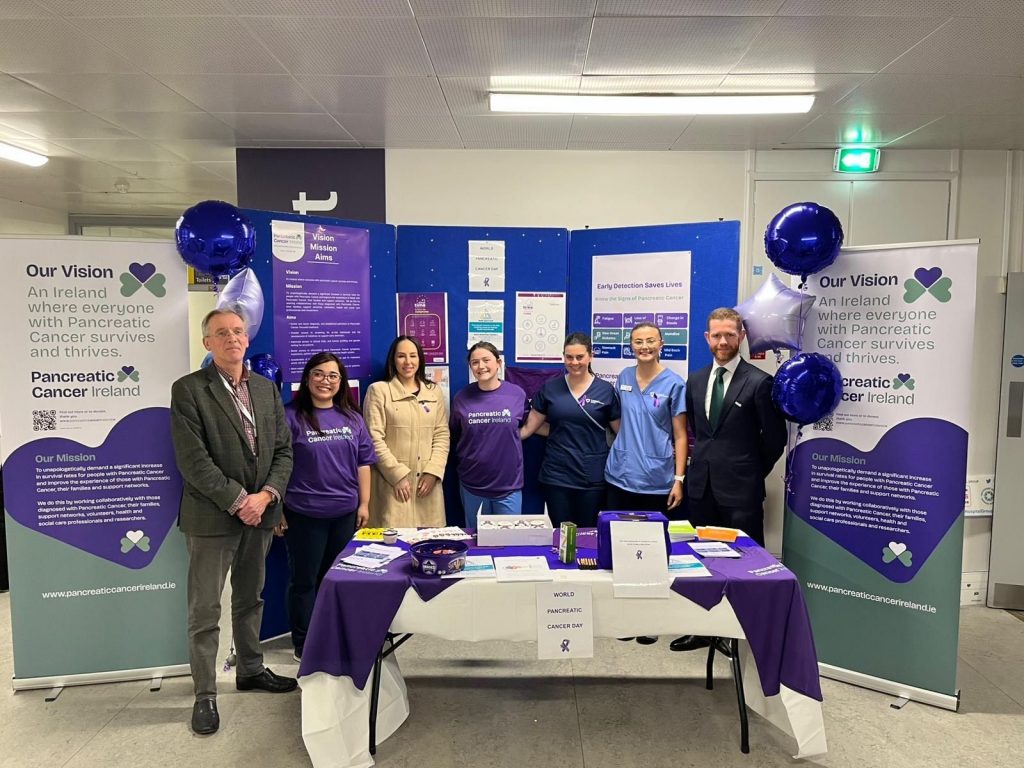
For World Pancreatic Cancer Awareness Day (20th November), specialists at St. Vincent’s University Hospital (SVUH) and Pancreatic Cancer Ireland are calling on Government to implement Rapid Access Diagnostic Clinics for pancreatic cancer nationally, warning that late diagnosis continues to drive some of the lowest survival rates of any major cancer.
Speaking on Newstalk’s The Hard Shoulder, Professor Tom Gallagher, Consultant Surgeon and Clinical Lead for Pancreatic Surgery at SVUH, highlighted that Ireland is expected to see approximately 600 new cases of pancreatic cancer this year. Tragically, around 500 of these patients will not survive beyond 12 months.
“We are seeing increasing rates of pancreatic cancer worldwide and Ireland is no exception. While survival rates for cancers like breast and colorectal have improved significantly, we are not seeing the same progress with pancreatic cancer,” said Professor Gallagher. “The core issue is late presentation. Symptoms are often vague, dismissed or misinterpreted and by the time people reach specialist services, curative treatment is often no longer possible.”
Prof. Gallagher highlighted the importance of recognising potential warning signs early. He outlined the types of non-specific symptoms that frequently delay diagnosis, including persistent upper abdominal pain, mid-back pain, loose or floating stools, indigestion or unexplained new-onset diabetes. He emphasised that jaundice – yellowing of the skin or eyes, pale stools or dark urine – is considered a red-flag symptom requiring urgent assessment.
“Anyone can have back pain,” he said, “but if symptoms persist for more than two or three weeks, especially when several occur together, that should set off alarm bells for patients and their GPs.”
Screening not suitable for the general population but essential for high-risk groups
Only about 10% of pancreatic cancers are linked to genetic factors, meaning routine population screening is not recommended. However, individuals with two first-degree relatives affected or those with a known genetic predisposition, should be screened.
Ireland will begin a pilot programme next year, in line with international guidelines, involving alternating annual MRI and endoscopic assessments.
Call to government: Implement rapid access diagnostic clinics
Prof. Gallagher stressed that meaningful improvement in survival depends on earlier specialist review and faster diagnostic pathways.
“Rapid Access Clinics have transformed outcomes in breast and lung cancer. They are already committed to in Ireland’s National Cancer Strategy (2017–2026), yet they remain unimplemented for pancreatic cancer. We need Government and Ministers to act.”
Representatives from SVUH and Pancreatic Cancer Ireland met with TDs and Senators in the Dáil to highlight the urgent need for these clinics.
Patient and Visitor Handbook
Our handbook contains all the important information you need when visiting our hospital whether you are a patient or a visitor.
- Travelling to and from the hospital
- Elective admission information
- Emergency Department attendance
- Patient safety information
- Information on what we will do to get you home
- Data protection
- Security information
- Infection control policy
- No smoking policy
- Visiting arrangements
- Daffodil Centre
- St. Vincent’s Foundation