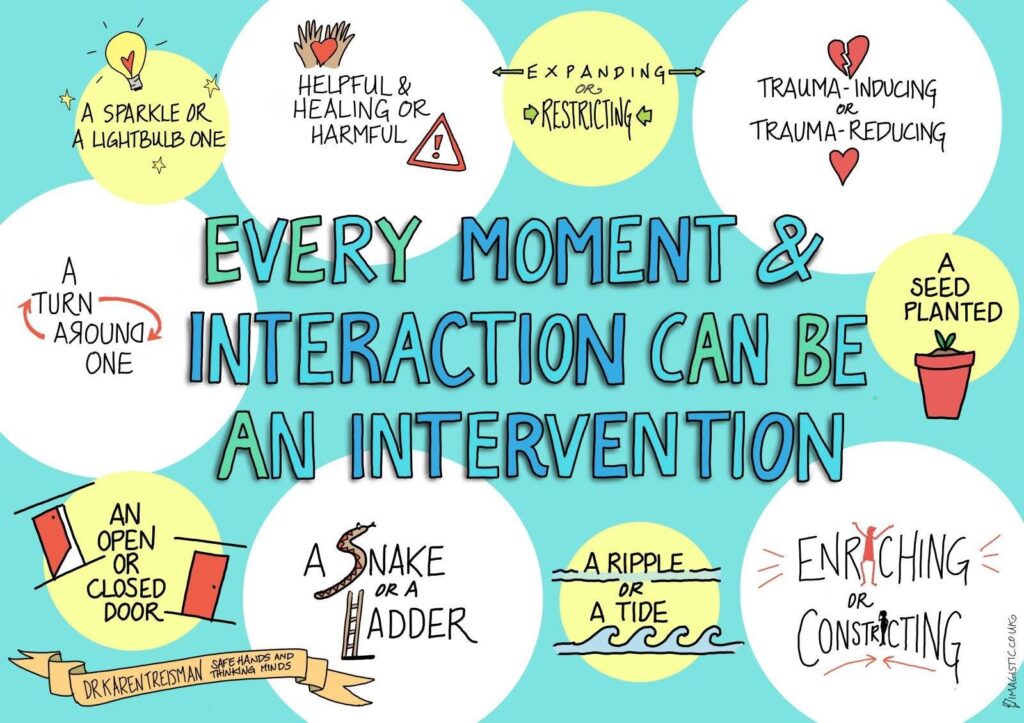
Credit: Dr Karen Treisman 2017
You are here:
Credit: Dr Karen Treisman 2017
This resource explores how attachment patterns influence our relationships with patients and colleagues, particularly under stress. It encourages healthcare professionals to reflect on their own responses, recognise what can get in the way of connection, and consider how to become a “secure base” for others through curiosity, self-awareness and emotional regulation. This information and resource is courtesy of Beacon House Therapeutic Services & Trauma Team | 2024 |
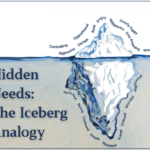
This illustrated iceberg metaphor explores the idea that behaviours such as anger, withdrawal, aggression or controlling behaviour may mask deeper emotional needs, such as feeling frightened, unsafe, confused or unworthy. It encourages healthcare professionals to look beyond what they see on the surface, respond with empathy and curiosity, and consider what a person may be communicating through their behaviour rather than making assumptions about their intentions. This information and resource is courtesy of Beacon House Therapeutic Services & Trauma Team | 2024 |
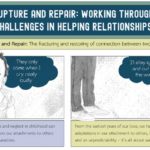 Rupture and Repair: Working Through Challenges in Helping Relationships
This resource explores the concept of rupture and repair in relationships, recognising that moments of disconnection, misunderstanding or conflict are inevitable, but can provide opportunities to rebuild trust and strengthen connection. For healthcare professionals, it offers a helpful framework for reflecting on interactions with patients, families and colleagues, and considering how acknowledging difficulties, taking responsibility and reconnecting with empathy can support psychologically safer, trauma-informed care. This information and resource is courtesy of Beacon House Therapeutic Services & Trauma Team | 2024 |
A practical guide outlining the six core principles of trauma-informed care: safety, trustworthiness and transparency, peer support, collaboration and mutuality, empowerment and choice, and cultural humility. It explores how these principles can be applied across healthcare settings and workplaces to strengthen relationships, support staff and patient wellbeing, and reduce the risk of re-traumatisation.
This booklet is a practical collection of trauma-informed resources for patients, families, visitors and staff at St. Vincent’s University Hospital. It includes guidance on managing emotional overwhelm, accessing psychological support, providing feedback about care, and recognising and responding to vicarious trauma and burnout. A helpful starting point for exploring ways to support emotional wellbeing, build resilience and foster a more compassionate healthcare environment.